The 7 Steps to Recover a Flooded Cobblestone Business
- Stop the source. Shut the main, kill the breaker to wet areas, or close the roof access.
- Protect people first. Evacuate staff and customers from any standing water near outlets or panels.
- Call your restoration partner. A 24/7 IICRC crew should be on site within 60 to 90 minutes.
- Notify your insurance carrier. Open the claim before cleanup begins so adjusters can authorize emergency mitigation.
- Document everything. Photos, video, inventory lists, and timestamps protect your claim.
- Extract, dry, and sanitize. Category determines protocol. More on that below.
- Reopen in phases. Many businesses can run partial operations while drying continues in sealed zones.
Common Commercial Water Losses We See in Cobblestone
- Burst supply lines in office buildings over holiday weekends
- Frozen pipe breaks in warehouses with marginal heat
- Sprinkler head discharges from forklift impact or freeze
- HVAC condensate overflow into drop ceilings
- Roof leaks during freeze-thaw cycles and spring storms
- Sewer backups in restaurants, salons, and medical offices
- Sump pump failures in basement-level retail and storage
- Slab leaks under tile in showrooms and lobbies
- Water heater tank ruptures in mechanical rooms
- Fire suppression line corrosion in older buildings
Each loss type carries different urgency, different drying timelines, and different insurance language. A clean supply line break is not the same emergency as a commercial sewage backup, and your documentation needs to reflect that.
Business Interruption: The Hidden Line Item
Structural drying is only half the recovery. The other half is keeping revenue moving and documenting the days you cannot. Business interruption coverage often pays for more than owners realize.
- Lost net income during the closure period
- Ongoing payroll for key staff you do not want to lose
- Temporary relocation rent and signage
- Extra expenses to expedite reopening, such as overtime drying crews
- Spoiled inventory and refrigerated stock
- Lost commissions and contract penalties tied to delivery dates
Pull your declarations page on day one. Note your waiting period (usually 48 to 72 hours) and your monthly limit. We can coordinate drying schedules to hit reopening targets that protect those numbers.
What Slows Down a Commercial Claim
- Waiting more than 24 hours to call a restoration crew
- Throwing away damaged inventory before it is photographed and inventoried
- Using a vendor who cannot produce IICRC certificates on request
- Skipping moisture mapping, which adjusters use to scope drying
- Letting facilities staff run shop vacs and box fans instead of commercial extraction
- No written scope of work before mitigation starts
- Missing utility shutoff documentation
- Unclear chain of custody on salvaged contents
- Conflicting estimates from multiple vendors on the same scope
How to Vet a Commercial Restoration Vendor Before You Sign
- Ask for IICRC firm and technician certificates
- Confirm 24/7 dispatch with a live person, not a callback
- Verify general liability and pollution liability insurance
- Request a written scope before extraction starts
- Ask how they communicate with adjusters and Xactimate
- Check Google and BBB reviews for commercial-specific work
- Confirm crew size and equipment fleet match your square footage
- Ask about prior work in your specific industry
If a vendor pressures you to sign an open-ended assignment of benefits before they have seen the loss, slow down. A good crew earns the work room by room. For storm-driven losses involving roof breaches, our commercial storm damage team handles tarping, water extraction, and structural drying as one coordinated job.
Equipment We Bring to a Mid-Size Cobblestone Loss
- Truck-mounted extractors that pull 100+ gallons per hour
- Desiccant dehumidifiers for warehouses and high-ceiling retail
- Low-grain refrigerant dehumidifiers for offices and medical spaces
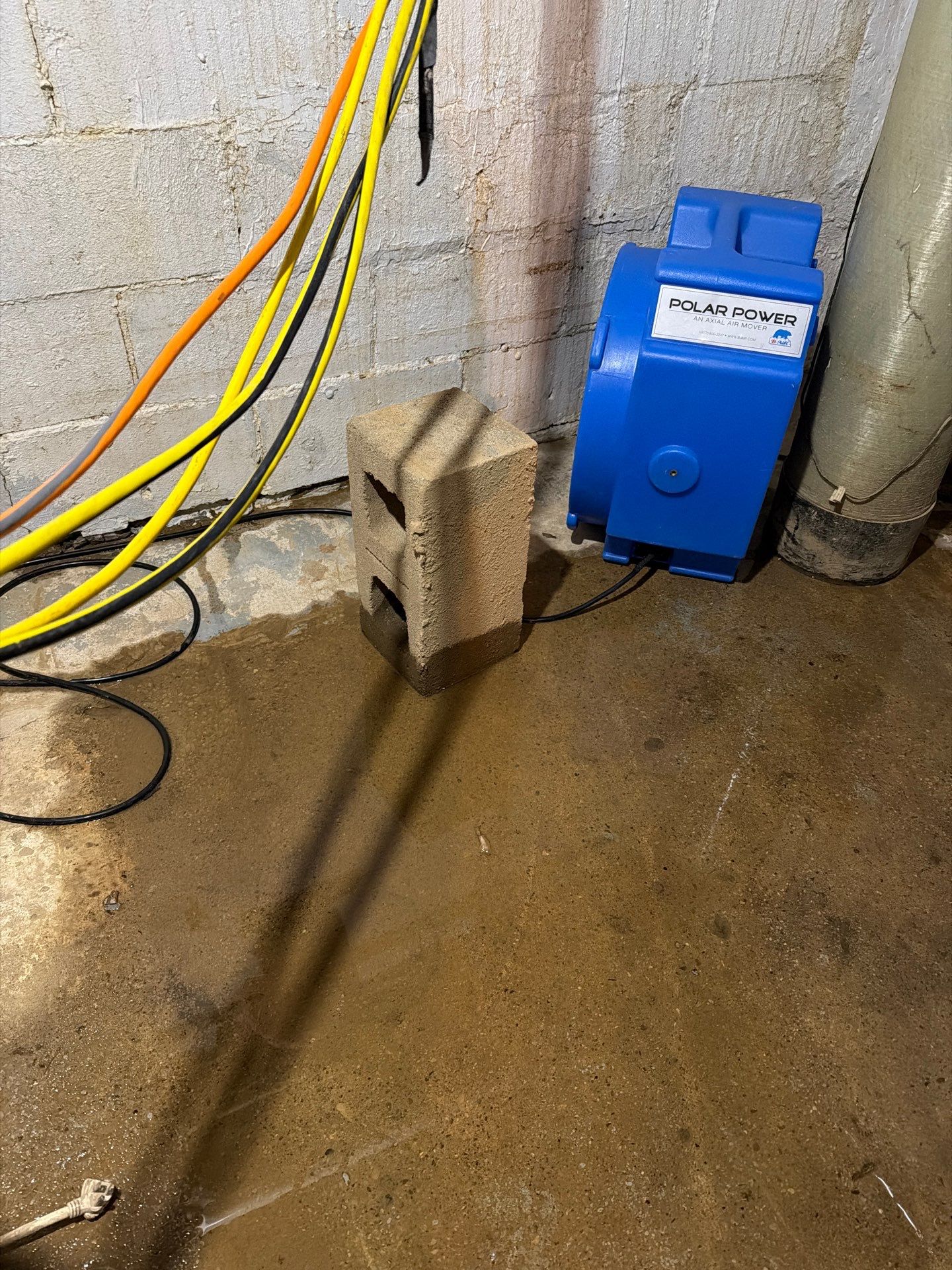
- Air movers rated for 2,800+ CFM, staged at IICRC spacing
- HEPA air scrubbers for occupied-zone work
- Thermal imaging and pin/pinless moisture meters for daily readings
- Containment poly and negative air for sealed dry-out zones
- Injectidry systems for wall cavities and hardwood assemblies
- Generator power when utilities are still locked out
For losses that touch HVAC, drywall cavities, or insulation, expect 3 to 7 days of structural drying. For larger floors or saturated concrete, plan on 7 to 14 days with daily moisture logs.
Industries We Work With in Cobblestone
- Property management and multi-tenant office buildings
- Restaurants, bars, and food service
- Medical, dental, and veterinary offices
- Retail, showrooms, and salons
- Schools, churches, and non-profits
- Warehouses, manufacturing, and light industrial
- Hotels and short-term rentals
- Auto dealerships and service bays
- Fitness studios and recreation centers
What You Will Notice in the First 48 Hours
- Air movers running 24/7 in sealed zones
- Daily moisture readings logged on a drying chart
- Adjuster-ready photos and scope updates by email
- Phased reopening plans for areas already dry
- Honest answers about what can be saved and what cannot
- A single point of contact who knows your job by name
IICRC Water Categories You Need to Know
- Category 1 (clean water): Supply lines, drinking fountains, rain through a clean roof. Lowest health risk if dried within 24 to 48 hours.
- Category 2 (gray water): Dishwasher discharge, washing machine overflow, aquarium leaks. Contains contaminants. Requires sanitization.
- Category 3 (black water): Sewage, toilet overflow with solids, river flooding, standing water older than 72 hours. Porous materials usually must be removed.
Why this matters for your claim: insurance adjusters write checks based on category. A misclassified loss can underpay your business by tens of thousands. We classify on arrival, in writing, with moisture readings and photos.
Category can also shift over time. A Cat 1 supply line break left sitting for 48 hours in a warm building becomes Cat 2. A Cat 2 left for 72 hours becomes Cat 3. That is why response time is not just about saving materials, it is about keeping your claim in the cheaper category.
Cost Ranges for Commercial Water Damage in Central Indiana
- Small office or retail (under 2,000 sq ft, Cat 1): $3,500 to $9,000
- Mid-size facility (2,000 to 10,000 sq ft, Cat 1 or 2): $9,000 to $35,000
- Restaurant or medical with Cat 3: $20,000 to $90,000+
- Warehouse or industrial (over 10,000 sq ft): $40,000 to $250,000+
- Content cleaning and pack-out: Often a separate line item, 15 to 30 percent of structural cost
Most commercial policies cover sudden and accidental discharge. Gradual leaks, neglected maintenance, and flood from rising surface water usually require separate coverage. We will tell you upfront which bucket your loss falls into. If you want a deeper breakdown, our guide to water damage restoration cost walks through line items adjusters expect to see.
Preventing the Next Loss
Once the dryers come out, take 30 minutes to harden the building against the next event. Cobblestone Water Restoration provides a free walk-through after every commercial job.
- Label every shutoff valve and panel breaker
- Install water sensors near water heaters, ice machines, and mop sinks
- Schedule quarterly inspections of roof drains and gutters
- Replace braided supply lines older than 8 years
- Insulate exposed pipes in warehouses and mechanical rooms
- Train an after-hours contact list for facilities and management
A 90-minute response time is great. A loss that never happens is better.