What DIY Actually Handles, and Where It Quietly Fails
There is a real category of water loss a homeowner can manage alone. A clean supply line drip under the bathroom vanity, caught within 2 hours or two, on a tile floor with no cabinetry damage, is the kind of thing a few towels and a fan will resolve. The water is clean, the surface is non porous, and the moisture has nowhere to hide. The IICRC calls this a Category 1 loss with Class 1 conditions, which is industry shorthand for minor and contained. If that describes your situation honestly, you probably do not need us, and we will tell you so on the phone.
The problem is that most calls do not look like that once you start measuring. A dishwasher that ran for an hour while you were at your kid's game in Cobblestone has pushed water under the kickplate, behind the cabinet boxes, and across the subfloor seam into the dining room. You will mop up what you see, set a fan in the kitchen, and feel like the crisis is over. Three weeks later the baseboard shoe starts to cup, a musty smell creeps in, and the drywall behind the dishwasher shows a faint brown tide line. That is the silent failure of DIY. The visible water leaves, but the trapped moisture stays, and now you are dealing with mold growth that can start within 48 hours on top of the original loss.
The same pattern shows up with washing machine supply hoses, ice maker lines, and the slow drip behind a toilet flange that nobody notices until the floor feels spongy. By the time the homeowner can see a problem with the naked eye, the materials behind the visible surface have usually been wet for days or weeks. Wood swells, particleboard cabinet bottoms delaminate, and the paper facing on drywall becomes a food source for microbial growth. None of that is reversible with towels and time. The structural members can sometimes be dried in place if the moisture is caught early, but once warping and delamination set in, the only remedy is removal and replacement, which is a much larger project than the original mitigation would have been.
The Equipment Gap Nobody Talks About
Walk into any hardware store in Cobblestone and you can rent a carpet extractor and a couple of air movers for about eighty dollars a day. What you cannot rent, and what most homeowners never see, is the diagnostic side of restoration. A professional crew shows up with thermal imaging cameras, penetrating and non penetrating moisture meters, and hygrometers that measure the actual grain depression of the air. We are not guessing whether your subfloor is dry. We are reading a number, comparing it to an unaffected area of the same material, and documenting both for your insurance file.
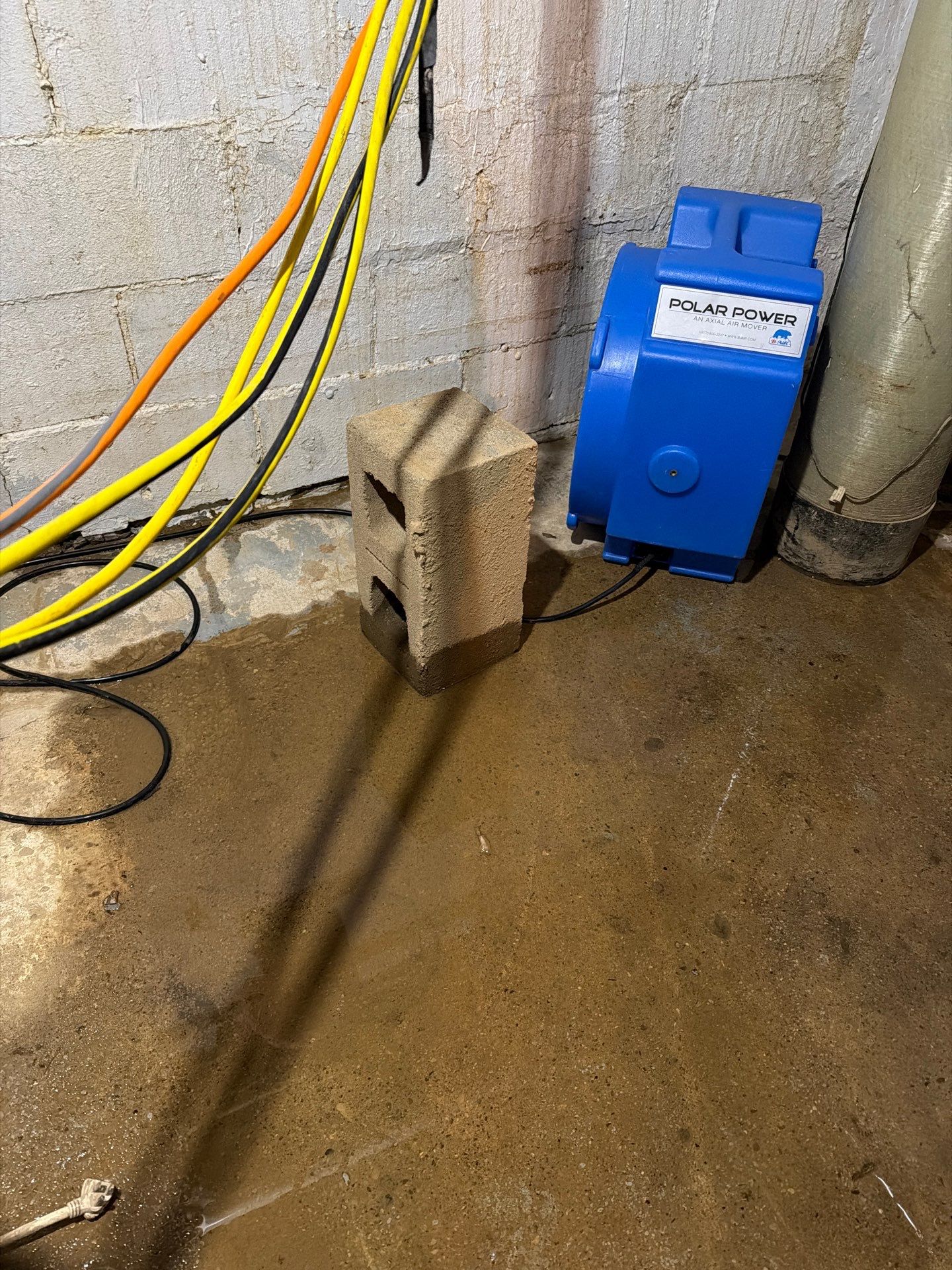
Drying equipment matters too, and not just the quantity. A residential box fan moves air, but it does not lower the vapor pressure in the room, which is what actually pulls moisture out of building materials. Low grain refrigerant dehumidifiers and desiccants are sized to the cubic footage and the class of loss, and getting that math wrong is why DIY jobs often look dry on the surface while the wall cavity stays at 22 percent moisture content for weeks. If you want to understand the timeline side of this, our breakdown of how long water damage takes to dry walks through what realistic drying looks like under controlled conditions.
There is also the question of placement and airflow geometry. Cobblestone Water Restoration technicians position air movers at specific angles to create a vortex along wet surfaces, and they rotate equipment based on daily moisture readings rather than running everything full blast for a week and hoping. That kind of adjustment is the difference between a structure that dries in three or four days and one that sits damp for two weeks while the homeowner pays for rental equipment and a rising power bill. The energy cost alone of running a half dozen consumer fans around the clock often surprises people when the next utility statement arrives.
Safety, Contamination, and the Categories You Cannot See
The other place DIY falls apart is contamination. Water from a supply line is clean when it leaves the pipe, but the moment it touches a dirty floor, runs through insulation, or sits for more than a day, it changes category. Grey water carries detergents, bacteria, and biological material. Black water, which includes any sewage backup or river flooding, carries pathogens that require PPE, antimicrobial treatment, and disposal protocols most homeowners are not equipped for. Reading our explainer on water damage categories is worth ten minutes before you decide to handle a loss yourself, because the wrong call here is the one that ends with a hospital visit or a contaminated HVAC system blowing spores through every room in the house.
There is also the electrical question. Standing water in a finished basement in Cobblestone often sits within a few feet of outlets, a furnace, or a water heater. Walking into that space without killing power at the panel is a real risk, and homeowners who try to extract water with a corded shop vac in a partially energized room are gambling in a way they would not gamble with any other home repair. Slip hazards, the weight of saturated carpet pad, and the awkward ergonomics of hauling soaked materials up a basement stairwell account for a surprising share of the back injuries and falls that send DIY restorers to urgent care during what was supposed to be a weekend cleanup.
The Insurance Side Most Homeowners Miss
Even when DIY technically works, it can cost you on the claim. Insurance carriers want documentation: moisture maps, photos with timestamps, drying logs, and an itemized scope tied to IICRC standards. A homeowner with a pile of receipts from a hardware store and a story about running fans for a week is going to have a much harder conversation with the adjuster than a homeowner with a professional file. We handle that paperwork as part of the job, and in most cases our Cobblestone Water Restoration crew is on site within 2 hours of your call so the documentation starts before secondary damage sets in. The cost difference between a DIY attempt that fails and a professional mitigation done right the first time is usually paid by your policy anyway, which is the part that surprises people most. Adjusters in Cobblestone are familiar with our reports, and that familiarity tends to shorten the approval cycle and reduce the back and forth that drags claims out for months.