Why Slow Leaks Do More Damage Than Big Ones
A burst supply line is loud, fast, and obvious. You shut the water off, you call for help, and a crew arrives in most cases within 2 hours to extract and dry. The water is usually clean, the affected area is well defined, and if everything is handled inside the first day or two, the structure typically comes back to original condition. A slow leak is the opposite of all of that. It releases small amounts of water over weeks or months, which gives the moisture time to soak deep into porous materials, migrate along framing through capillary action, and feed mold colonies that would never get established under fast dry conditions. By the time you smell anything, the colony has already had its 48 hour head start many times over, and the damage has compounded in ways a quick mop up could never address.
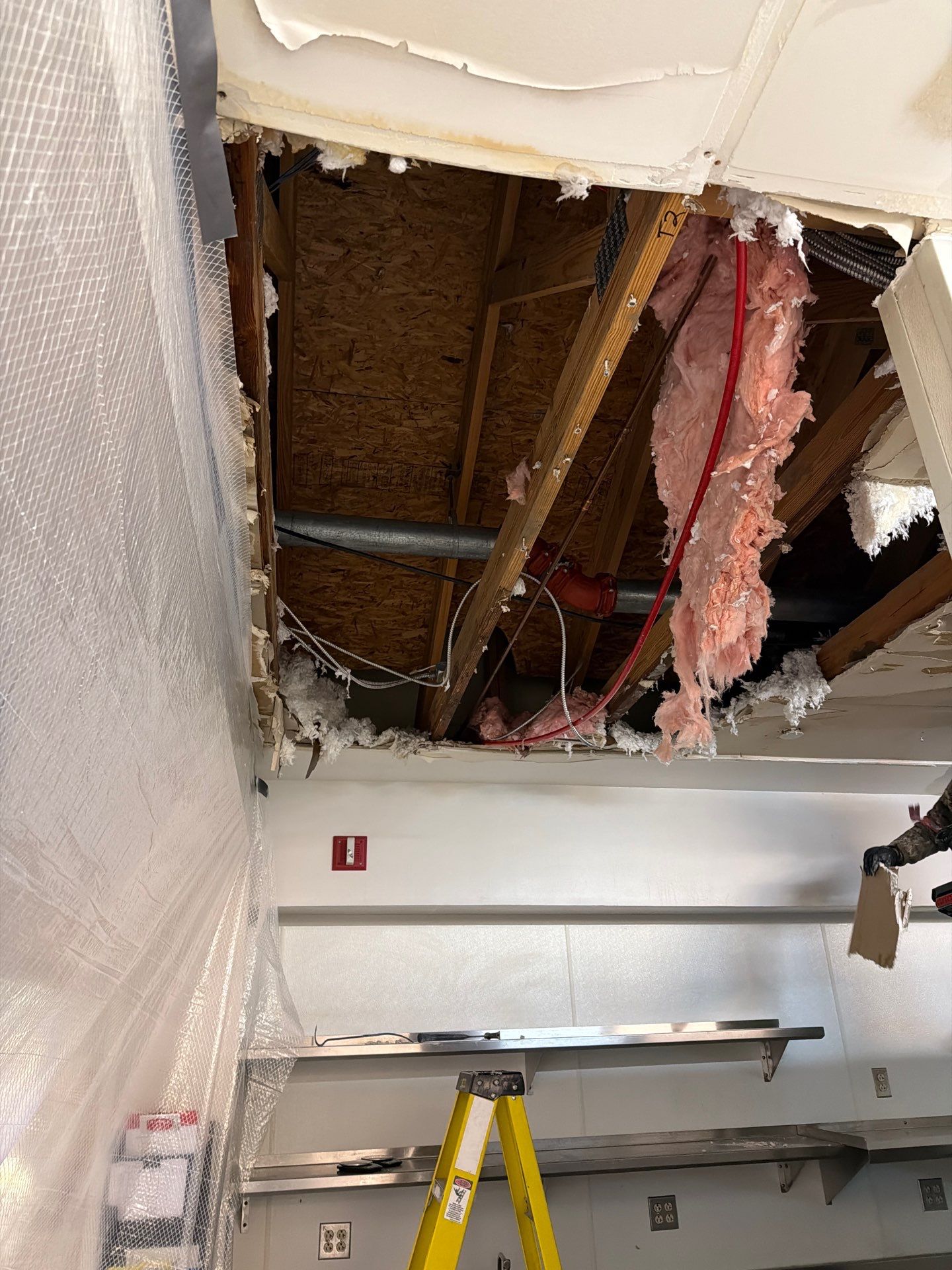
The math is uncomfortable. A pinhole leak in a copper line that drips at one drop per second releases roughly five gallons of water per day. Over a month that is around 150 gallons, almost all of it absorbed quietly into drywall, insulation, and the back side of a cabinet. The repair scope at that point usually involves removing materials rather than drying them, because gypsum board that has been wet and dried repeatedly loses structural integrity and almost always harbors microbial growth on the paper facing. Insulation behaves the same way. Fiberglass batts compress and lose their R-value once saturated, and cellulose insulation clumps and stays damp for months even after the original source is fixed. Subfloor plywood delaminates in layers, with the top ply often looking acceptable while the glue lines beneath have already failed, which is why a floor can feel spongy long before any visible damage appears upstairs.
There is also a hidden cost most homeowners do not consider until the claim is filed. Many insurance policies exclude or limit coverage for damage that has been ongoing for more than fourteen days, on the reasoning that a reasonable homeowner should have noticed the problem sooner. A burst pipe is almost always covered. A slow leak that has been quietly destroying a kitchen base cabinet for six months is frequently denied, or paid out at a fraction of the true repair cost. That single distinction has cost Cobblestone homeowners tens of thousands of dollars in out of pocket repairs that a faster response would have shifted onto the carrier.
Where We Find Hidden Leaks in Cobblestone Homes
Patterns repeat across the houses we inspect. Refrigerator water lines that were nicked during installation start weeping years later behind the unit, and the damage shows up first as warped flooring at the toe kick of the adjacent cabinet. Toilet supply valves and wax rings fail silently and rot the subfloor around the closet flange, which you only discover when the toilet starts rocking. Shower pans crack along the curb and send small volumes of water into the joist bay below, staining a basement ceiling that gets blamed on condensation for a year before someone calls. Dishwasher gaskets, ice maker fittings, washing machine hoses, and water heater drain pans all top our list, and we have written specific guides on the refrigerator water line scenario and the behind the wall detection process for homeowners who want to dig deeper.
The clues are subtle. A door that suddenly sticks in humid weather can mean the jamb has swollen because the framing behind it is wet. Nail pops in a ceiling, especially in a straight line, often trace the path of a leaking pipe in the joist bay above. Paint that bubbles in one small spot, flooring that cups along a single seam, a section of carpet that feels cooler than the rest of the room, all of these point to moisture that has been present long enough to change the materials. Trust your nose too. A persistent earthy or musty smell in a closet, a cabinet, or a finished basement is almost never nothing.
Outside the obvious plumbing suspects, we also find leaks where homeowners rarely think to look. HVAC condensate lines clog and back up into the air handler pan, slowly soaking the platform and the framing below. Window flashing that was installed incorrectly during a remodel can let wind driven rain weep into the wall cavity, with no visible sign until the drywall below the sill finally crumbles. Roof penetrations around bath fans and plumbing vents drip a few ounces with every rainstorm, which adds up to gallons across a season. Crawlspaces are their own category, where a slow drip from a galvanized line corroding at a fitting can keep the ground perpetually damp and feed mold growth into the floor joists overhead.
What a Real Assessment Looks Like
When you call Cobblestone Water Restoration for a free assessment, we are not guessing. We carry moisture meters that read both the surface and the depth of materials, thermal cameras that show temperature differentials caused by evaporative cooling, and humidity probes that tell us whether a cavity is actively wet or simply stained from a past event. A proper inspection takes time, usually 45 minutes to an hour and a half for a single family home, and we walk you through what we are seeing as we go. You should expect to see numbers, not adjectives. If a wall reads 28 percent moisture content at the base and the surrounding drywall reads 6 percent, that is a documented finding, not an opinion.
We also document everything photographically before any demo happens. That matters when an insurance adjuster shows up two days later and needs to understand the scope. Thermal images timestamp the moisture footprint, meter readings establish severity, and our written notes give the carrier a clear narrative for why each affected material needs to be addressed. Homeowners who try to handle the initial documentation themselves, with a phone flashlight and a guess, frequently lose coverage on portions of the scope simply because the evidence was not captured in a form the carrier accepts.
For comparison, here is roughly what hidden leak repair scopes look like across the jobs we run in central Indiana:
The pattern is consistent. Time is the single biggest variable in what a slow leak costs you, which is why we encourage homeowners to read our piece on how quickly mold establishes after water exposure before deciding to wait and see. Waiting almost never saves money. If something in your house feels off, a sticky door, a faint smell, a soft spot you keep meaning to check, that instinct is worth a phone call. An assessment costs nothing, and the answer it produces, whether the news is good or bad, is always cheaper than the answer you get six months from now.