How do I know if my crawl space actually has water damage?
The most obvious sign is standing water, but most Cobblestone homeowners never see that. What you will notice first is a musty, earthy smell drifting up through registers or floor vents. You may also see condensation on ductwork, rust on metal straps and nails, sagging insulation pulled away from joists, or buckled hardwood floors above the crawl. If your sump pump runs constantly after a rain, or your humidity sensor in the home stays above 60 percent in summer, the crawl space is almost certainly the source. We bring moisture meters and thermal cameras on every inspection, because dirt and wood read very differently than they look. Another quiet indicator is unexplained allergy symptoms in the household, especially during humid stretches, since crawl space air accounts for roughly 40 percent of the air your family breathes upstairs through the stack effect.
Is crawl space water dangerous, or can I just let it dry on its own?
It depends on the IICRC water category. Clean water from a supply line is Category 1 for the first 24 to 48 hours. Groundwater that seeps through block walls or footings is Category 2, often called gray water, because it carries soil contaminants and bacteria. Sewage backup or floodwater from outside is Category 3, the most hazardous. Letting a crawl space dry passively is not realistic in Cobblestone. Our soil holds moisture, our humidity runs high from May through September, and crawl spaces have almost no airflow. Without forced drying, you are looking at mold growth on joists within 48 to 72 hours and structural softening within months. If you suspect sewage involvement, our sewage cleanup team handles the contamination protocols before any drying equipment goes in.
How much does crawl space water removal and drying cost in Cobblestone?
Most jobs in Central Indiana fall between $2,500 and $8,500. A small Category 1 cleanup with minimal insulation loss can run $1,800 to $3,000. A larger crawl with Category 2 groundwater, full insulation replacement, and a new vapor barrier typically lands in the $5,000 to $9,000 range. Category 3 sewage events, joist treatment, or encapsulation add cost. Homeowners insurance often covers sudden and accidental water events, like a burst pipe or appliance failure, but rarely covers long-term seepage or grading issues. We document the cause carefully because that documentation is what gets claims approved. Our broader breakdown of water damage restoration cost walks through how categories, square footage, and equipment days build the final number.
How can I prevent the next crawl space water event?
The cheapest fixes happen above ground. Clean your gutters twice a year, extend every downspout at least 6 feet from the foundation, and make sure the soil slopes away from the house at roughly an inch per foot for the first 10 feet. Inside the crawl, install a battery backup on your sump pump and test it every spring. A simple water alarm placed near the sump basin costs under $20 and texts your phone if the pit fills. We also recommend an annual crawl space walkthrough, especially after wet winters, so Cobblestone Water Restoration can catch a torn vapor barrier or rising water table before it becomes a five-figure restoration job.
What does the water removal process actually look like?
When our crew arrives, the first thing we do is identify the source and stop it. There is no point extracting water while a broken supply line keeps pumping. After that, we deploy submersible pumps for anything deeper than an inch or two, and truck-mounted extractors for shallow water sitting on plastic or soil. For most Cobblestone crawl spaces, we pull between 200 and 1,500 gallons depending on the footprint and depth. We then remove and bag any saturated insulation, because wet fiberglass holds water like a sponge and feeds mold. Vapor barriers that are torn, displaced, or sewage-contaminated come out too. By the end of day one, the crawl should be physically dry to the touch, even if structural moisture is still high. Our technicians work in Tyvek suits, respirators, and headlamps, and we lay down clean plastic runners at every access point so nothing from the crawl tracks into your living space.
How long does it take to dry a crawl space properly?
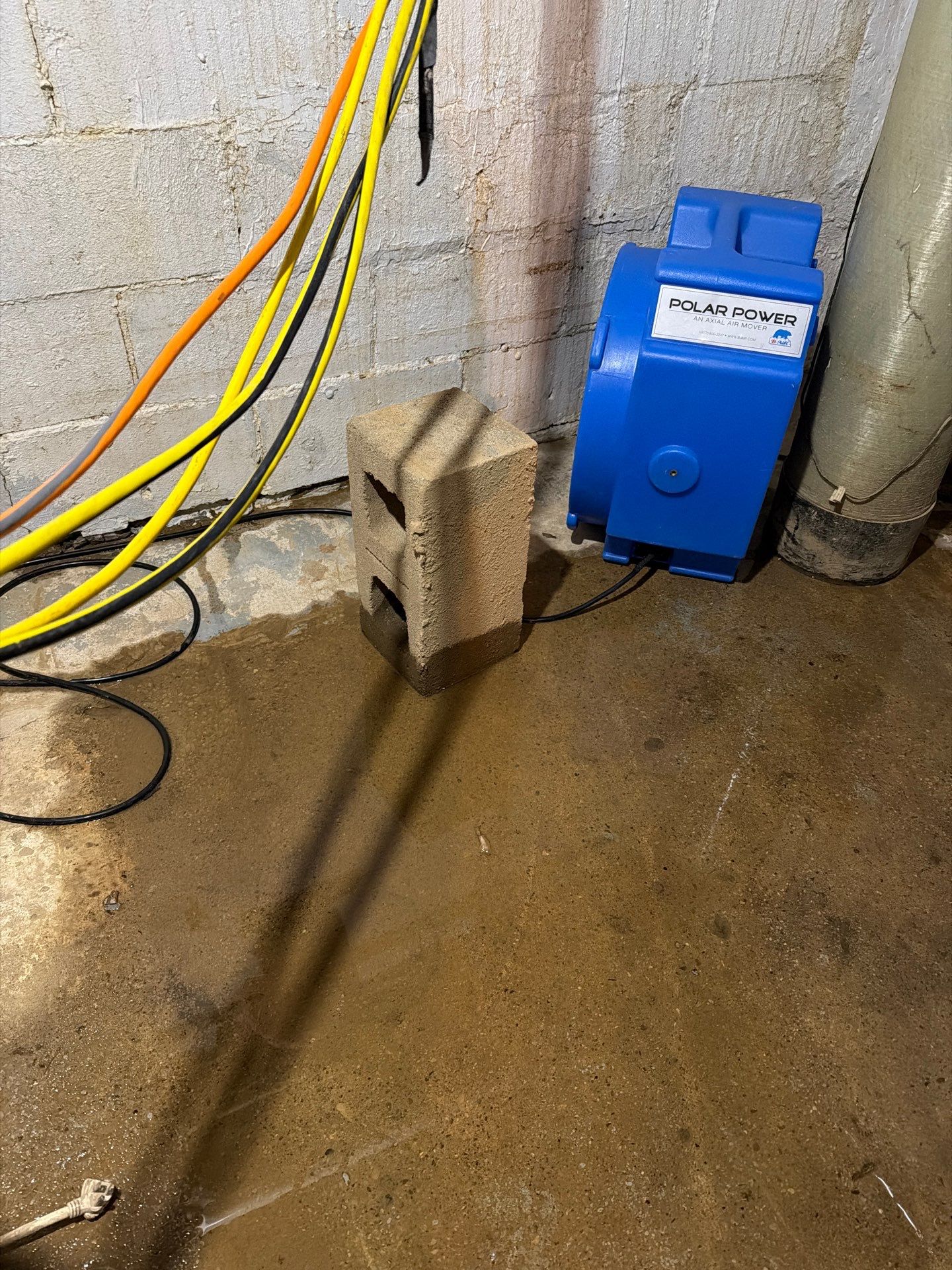
For a typical Cobblestone home with a 1,200 to 1,800 square foot crawl, full structural drying runs 3 to 7 days. We set commercial dehumidifiers (usually LGR or desiccant units depending on the temperature) and air movers positioned to create circulation across joists and subfloor. We monitor with moisture meters daily, targeting wood moisture content below 16 percent before we pull equipment. Concrete and masonry can take longer. If the crawl has been wet for weeks before we arrived, drying can stretch to 10 days because the framing has absorbed deep moisture that pulls back out slowly. Rushing this step is how mold problems start three months later. We also log temperature and grains per pound readings twice a day, because dehumidifier performance shifts dramatically once the dew point drops, and we resize equipment mid-job if the numbers stall.
Will fixing the crawl space stop water from coming back?
Removal and drying solve the current damage, but not the cause. If your water came from grading, gutters, or a failed sump, those need correction or the next storm puts you right back where you started. We walk every job with the homeowner and flag the source, whether that means extending downspouts, regrading soil away from the foundation, replacing a sump pump, or sealing block walls. Some jobs lead naturally into encapsulation, which seals the crawl from ground moisture entirely.
What about mold? Should I expect to find it?
If water has been present more than 72 hours, yes. We assume mold is part of the job and inspect every joist, subfloor bay, and band board. Surface mold on wood is treatable with antimicrobial application and HEPA vacuuming. Deep mold inside the wood grain may require sanding, encapsulation, or in rare cases joist replacement. We document everything with photos and moisture readings so your insurance adjuster has clear evidence. For broader context on hidden moisture issues throughout a home, our write-up on water damage behind walls and hidden leak detection covers the same diagnostic approach we use under the floor.
What can I do right now before the restoration crew arrives?
Shut off the water at the main if a plumbing leak is the source. Kill power to any outlets or lights in the crawl at the breaker, because mixing standing water and electricity is how people get hurt. Do not climb in to pull insulation yourself if you smell sewage or see dark, oily water. Open the crawl space access to start passive ventilation, but close it again if outdoor humidity is high. Take photos from the access opening for your insurance file. Then call us. We answer 24/7 and can usually have a Cobblestone crew on site within 60 to 90 minutes for emergency response.